
What Can Cause a Survey to Take Longer Than Expected?
Hannah Taylor
February 24, 2026
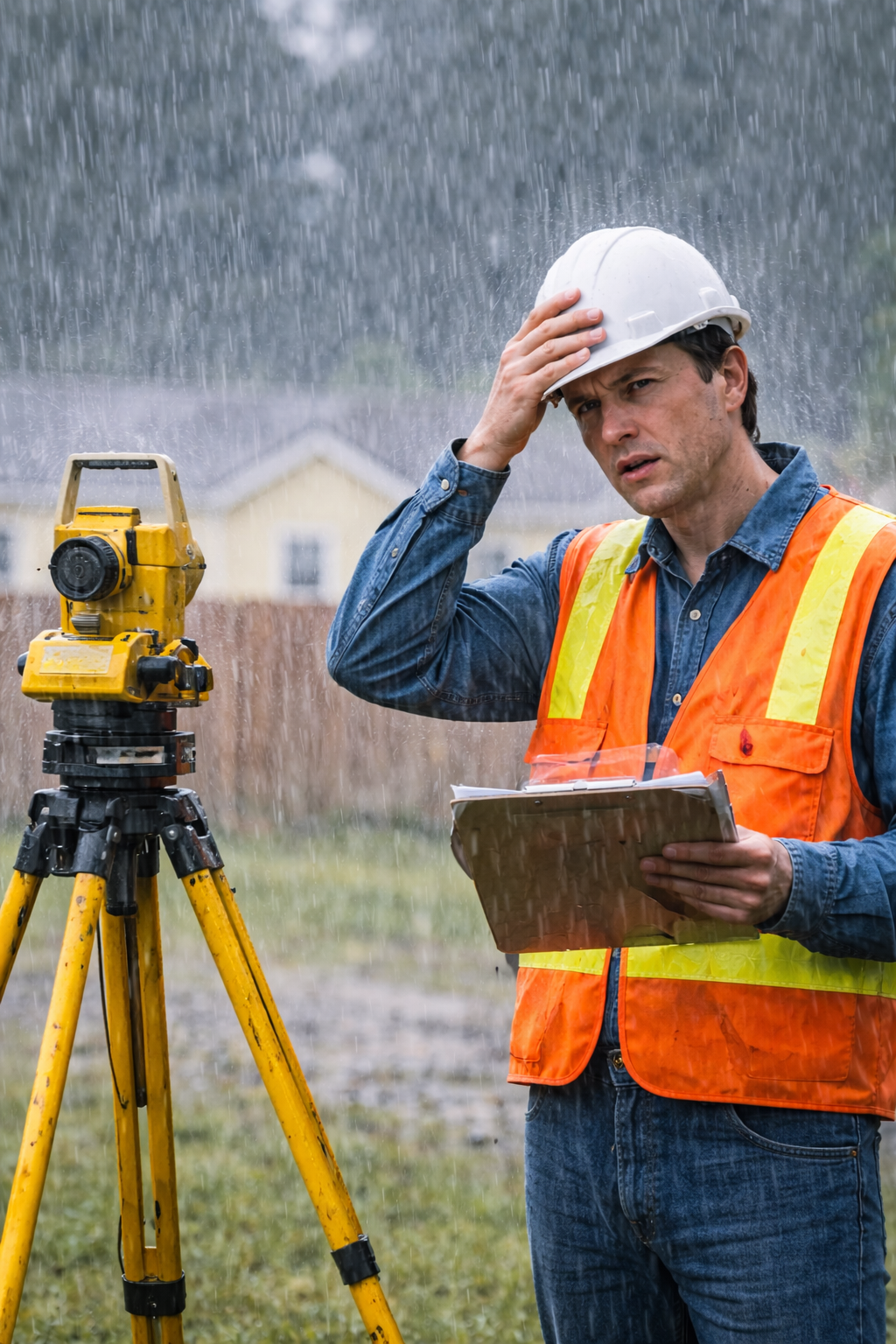
Property owners are often surprised when a land survey takes longer than expected. While many surveys proceed smoothly, certain factors can slow the process. Understanding what typically causes delays can help set realistic expectations and prevent avoidable setbacks.
A land survey involves more than collecting measurements on-site. Accurate results depend on conditions in the field and the availability of reliable information. When those factors are limited, additional time may be required.
Common Reasons Surveys Take Longer
Weather Conditions
Weather is one of the most frequent and unavoidable causes of delay. Heavy rain, saturated ground, snow cover, or storms can limit visibility and make certain areas unsafe or inaccessible. In these cases, fieldwork may need to be postponed until conditions improve to ensure accuracy.
Access Issues
Surveyors must be able to physically access the property and, in some cases, surrounding areas. Delays often occur when:
- Access instructions are not provided in advance
- Gates are locked or restricted
- A required contact person is unavailable at the time of the visit
- Adjacent properties cannot be accessed when needed
If access cannot be obtained when the crew arrives, the field visit may need to be rescheduled.
Missing or Limited Field Evidence
Some properties lack clear physical evidence such as visible corner markers or monuments. When boundary markers are missing, buried, or disturbed, additional investigation and measurements may be required to confidently document what exists on the ground.
Dense vegetation, overgrowth, or physical obstructions can also slow data collection and limit visibility of key features.
Why the Work Takes More Than a Single Day
Clients often assume a survey is completed as soon as the site visit ends. While fieldwork may take place in a single day, the full process also includes:
- Reviewing and organizing collected field data
- Comparing measurements with recorded property documents
- Drafting the final survey map or report
- Performing internal accuracy checks before delivery
Each step is necessary to ensure the final survey accurately represents the property as it exists.
Setting Clear Expectations From the Start
At First Choice Surveying, we are upfront about turnaround times based on current workloads and site conditions. Our goal is to provide realistic timelines from the beginning—not surprises later.
While some delays are outside anyone’s control, many can be minimized by:
- Providing clear access details ahead of time
- Ensuring gates, locks, or entry points are accessible
- Sharing any available property information prior to the field visit
Understanding the factors that affect survey timelines helps property owners plan more effectively and avoid unnecessary interruptions.
If you’re preparing for a survey and want a clear, honest timeframe, contact First Choice Surveying. We’re committed to accurate work, transparent communication, and delivering dependable results you can trust.
Related Articles
Lorem ipsum dolor sit amet, consectetur adipiscing elit.

A Career in Surveying

Why Licensing Matters